Our Mission
Sponsor-A-Can recovers neglected resources to strengthen the communities we serve. Whether it’s an abandoned shopping cart returned to a retailer or recovered plastic given new life as 3D printer filament, our work reduces waste, supports local economies, and treats every person it touches — collector, retailer, neighbor, resident — with dignity.
SAC Today
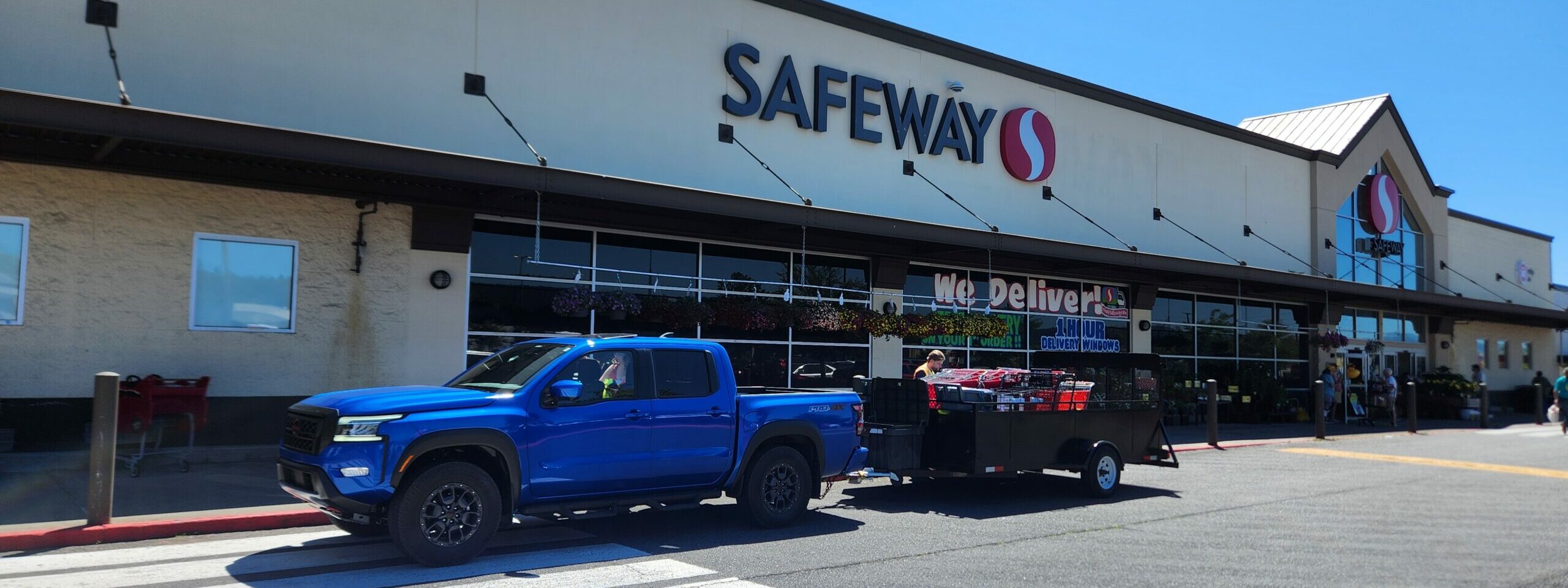
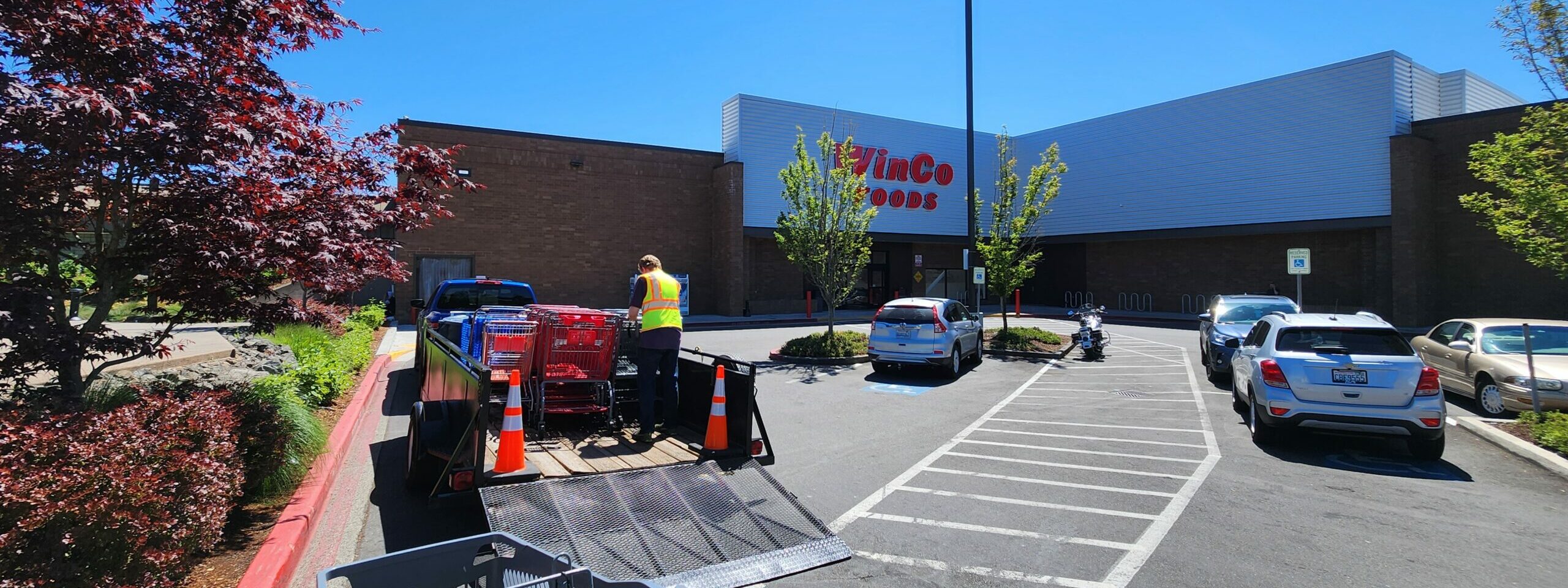
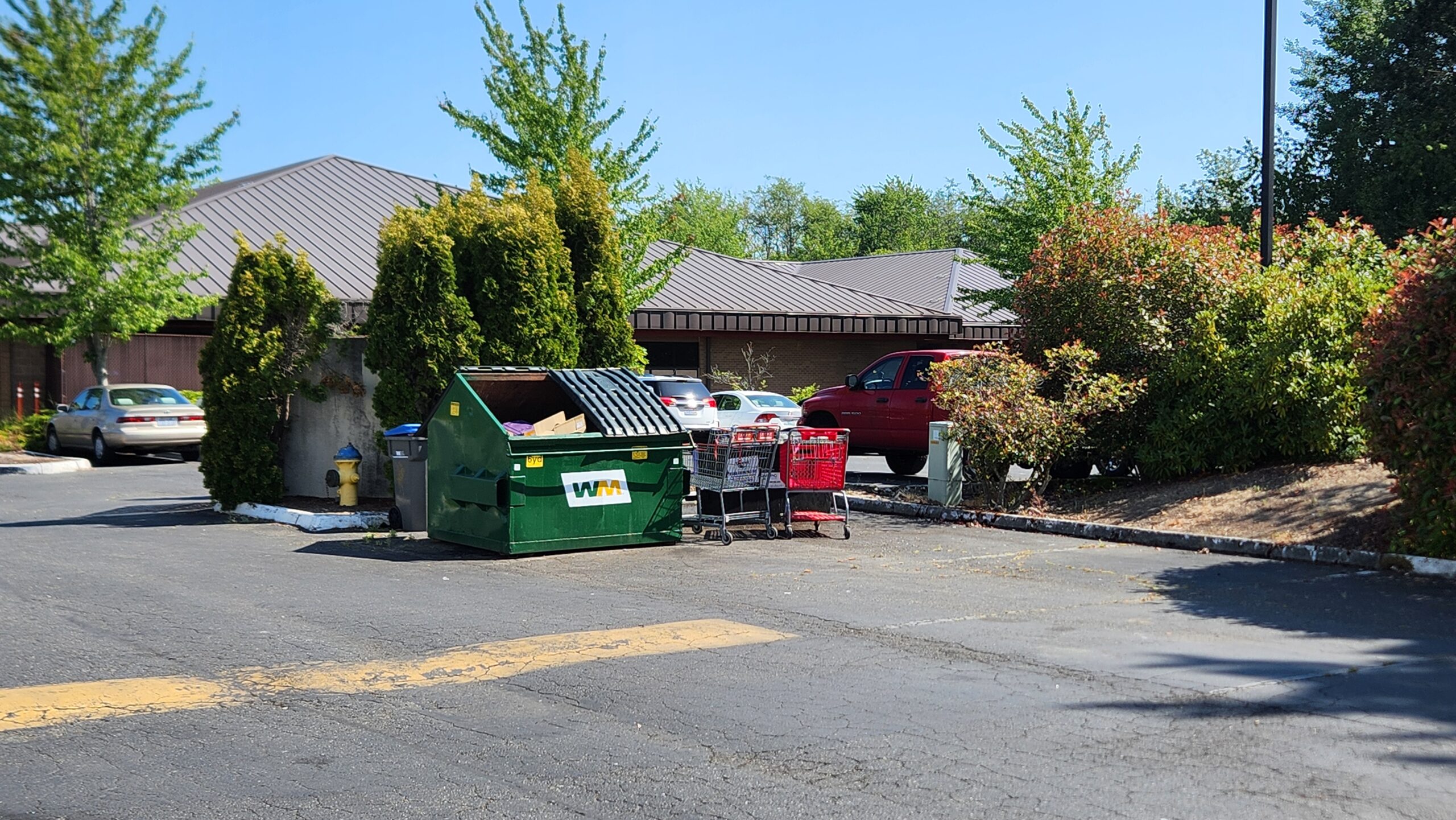
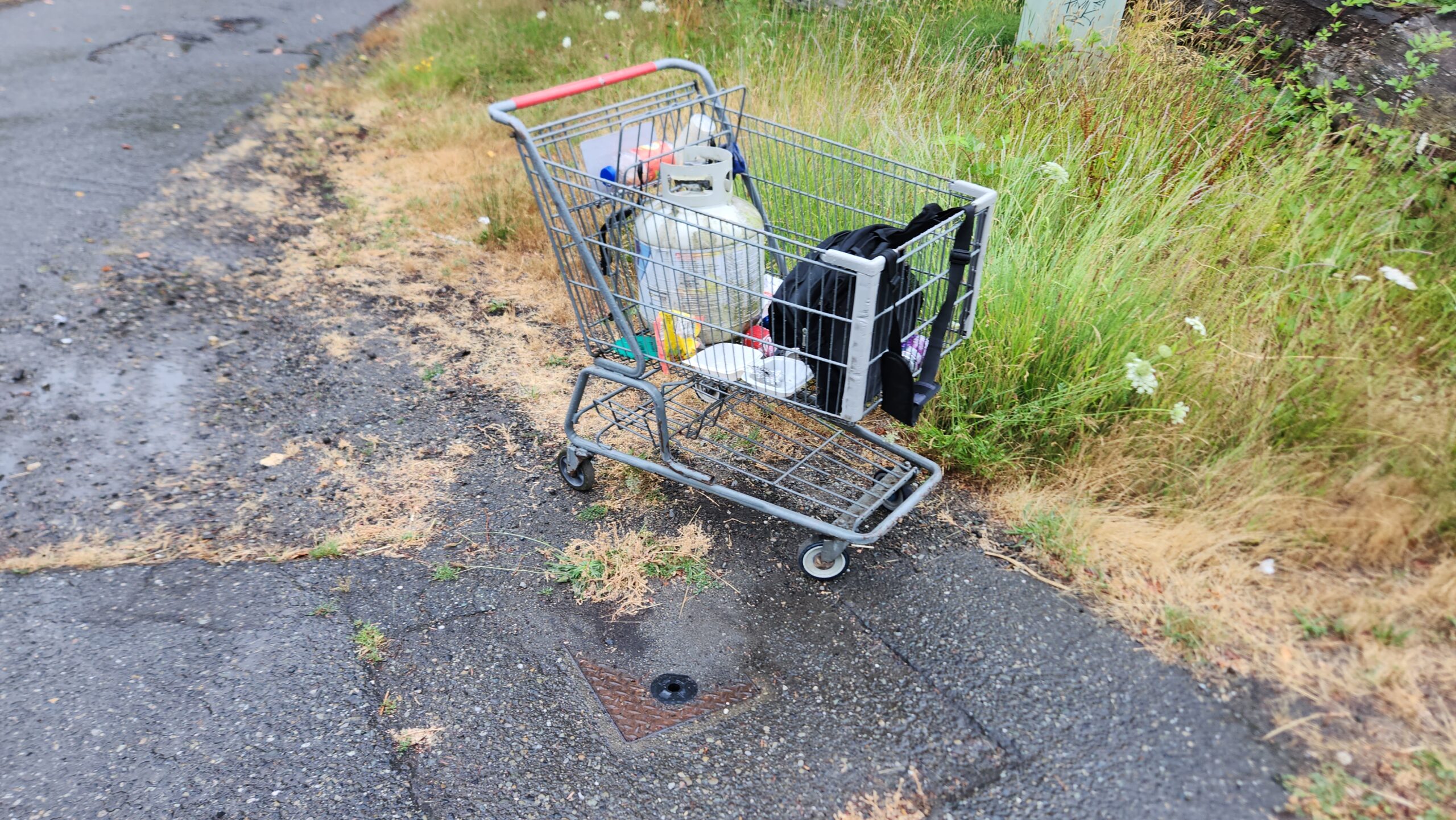
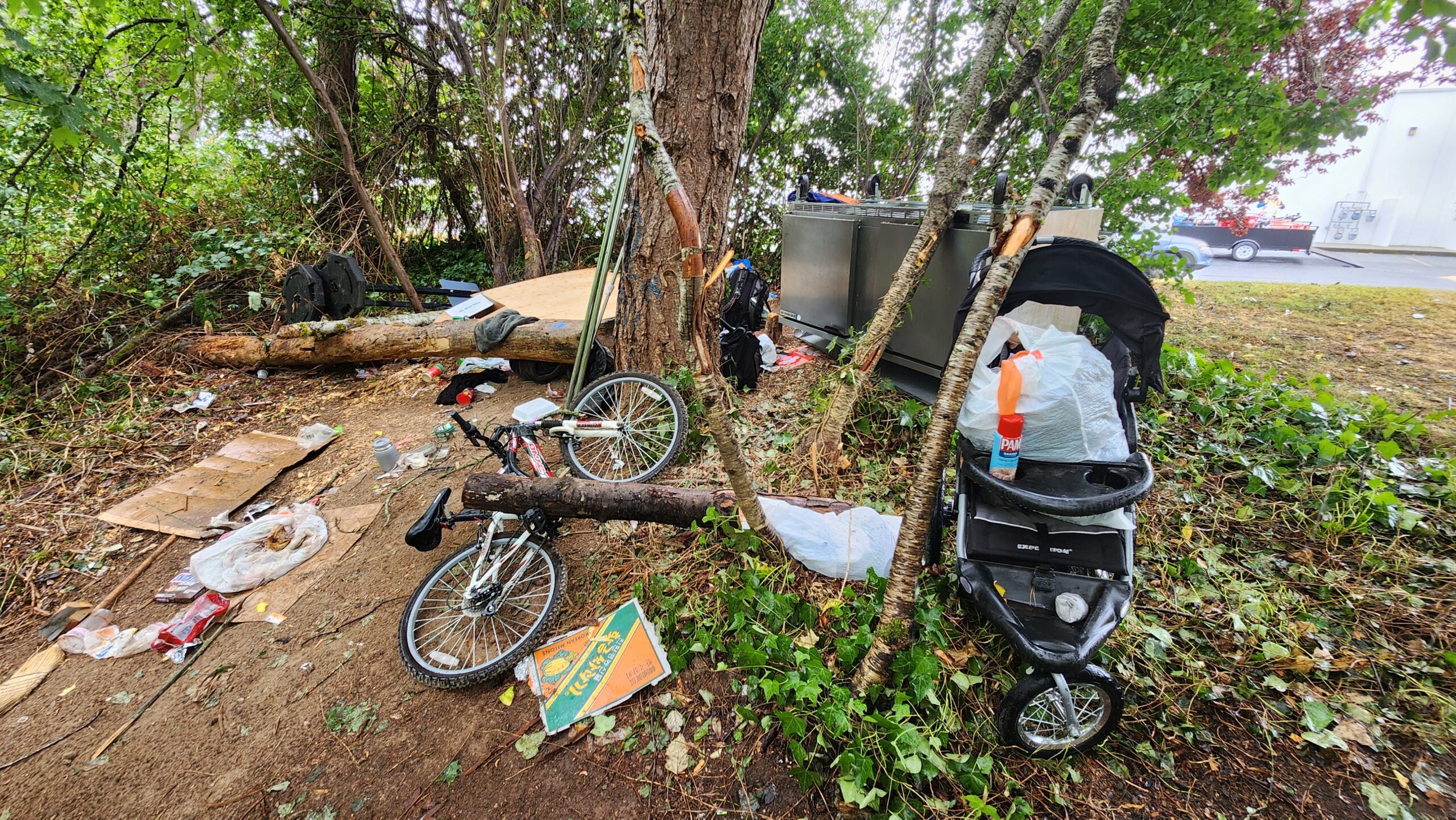
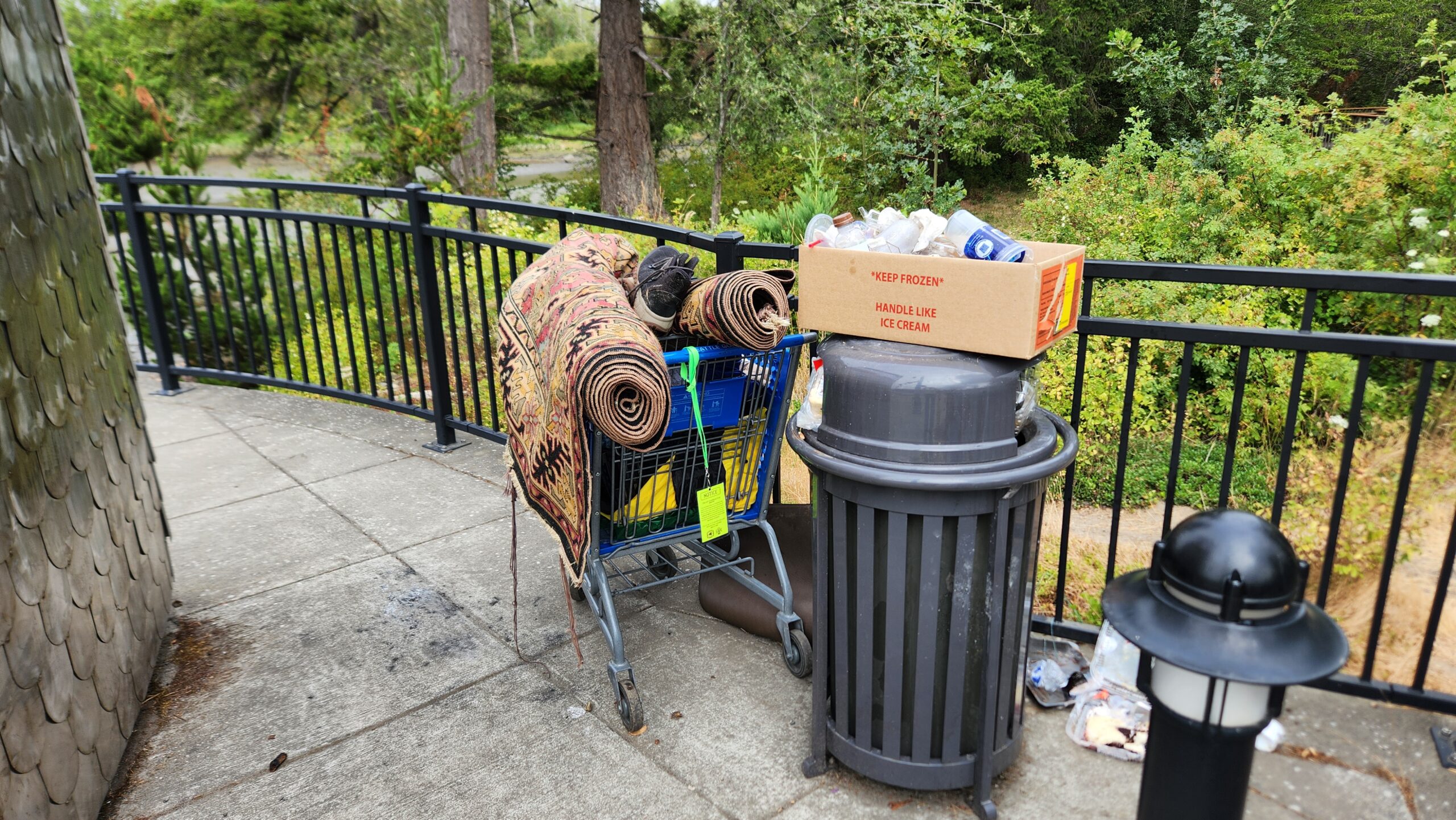
What we do today is cart recovery. Under contract with Kitsap County since 2023, we’ve returned over 1,485 carts — more than $668,000 in retailer assets back to active use — working alongside the Kitsap County Sheriff’s Office and local outreach partners to keep public spaces clean and reduce retailer loss.
Every recovery is GPS-tagged, photographed, and logged in real time. County officials and retailers can audit our work through a live stakeholder portal — no spreadsheets, no monthly PDFs, no taking our word for it. And because we’re consistently present in places institutional services can’t easily reach, the work goes beyond carts. In 2025, a routine patrol near Kitsap Mental Health turned into a life-saving hypothermia call. The recovery work is the entry point. The community presence is the deeper value.
SAC Tomorrow
What we’re building next is a complementary sustainability program: converting recovered PET plastic into 3D printer filament for community-scale manufacturing, with pilot work planned in underserved areas of the United States and the Philippines.
PET — the plastic in nearly every disposable bottle — is one of the most abundant and most recyclable plastics on the planet, yet rarely captured at the community level. By converting it into filament for desktop and small-scale 3D printers, we close the loop locally: waste becomes raw material, raw material becomes useful objects, and the skills to run the equipment become an economic-opportunity pathway for the people doing the work. The first pilot will focus on indigenous community partnerships, with the long-term goal of replicating the model in waste-burdened, opportunity-scarce regions.
In The News & milestones
Carts collected, cleaned & returned | 2025
What Is Save-A-Cart
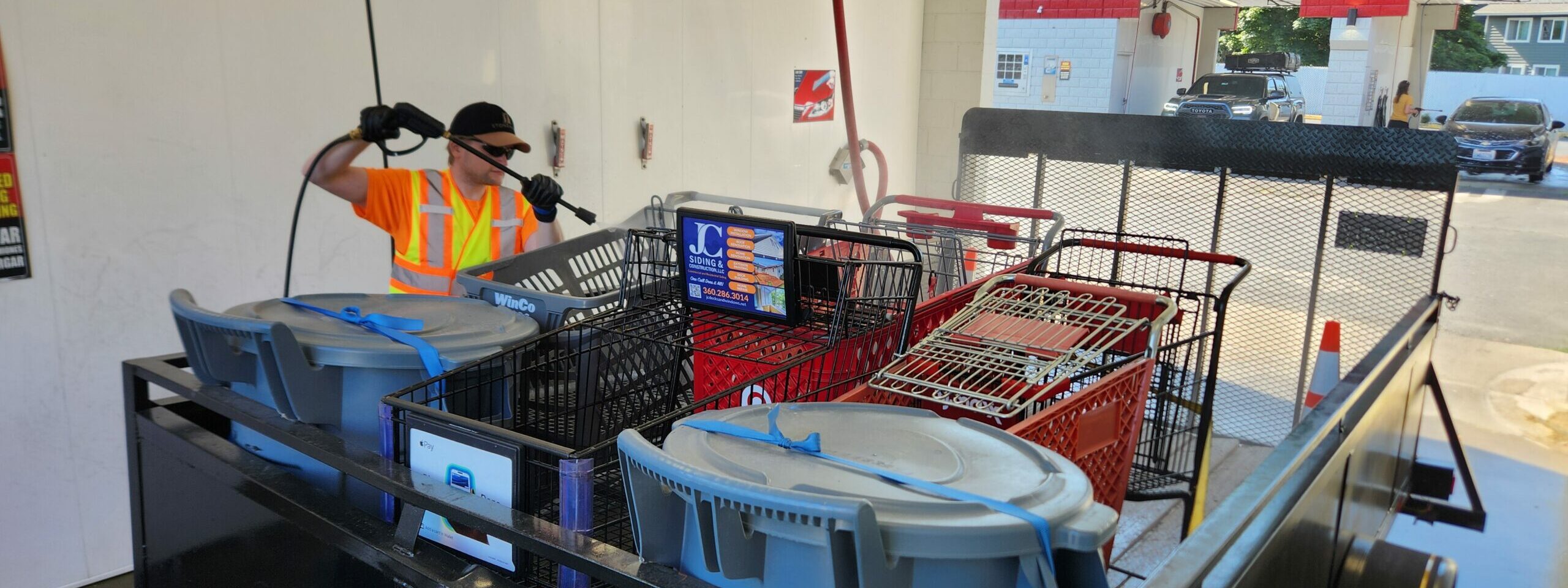
Save-A-Cart is Sponsor-A-Can’s cart-recovery program. We’re a Washington State 501(c)(3) nonprofit (EIN 93-1624890) that recovers, cleans, and returns abandoned shopping carts across Kitsap County. Under contract with Kitsap County since 2023, we’ve returned over 1,485 carts — more than $668,000 in retailer assets back to active use — working alongside the Kitsap County Sheriff’s Office and local outreach partners to keep public spaces clean and reduce retailer loss.
Want this in your city or county? The Save-A-Cart program model is built to replicate. The operational systems, field tools, and reporting infrastructure we’ve refined in Kitsap can support cart recovery programs in other jurisdictions — anywhere abandoned carts are a persistent problem for retailers and neighborhoods. If you’re a county official, retailer, or community organizer interested in launching cart recovery in your area.
Carts collected, cleaned & returned | 2024
Community Building Through Plastic Waste Solutions
The Technology
Overview:
- 3D Printers: We are using an array of 3d printers from companies such as Prusa, Bambu, Creality & Tronxy to develop our solutions.
- Recycling Process: PET plastic bottles are processed and converted into filament, which can then be used for 3D printing. This process is adaptable to any 3D printer with similar components, offering flexibility in implementation.
Key Points:
- Affordable and reliable technology.
- Supported by a large community.
- Adaptable to various 3D printers.
Proof of Concept
Printing Now!
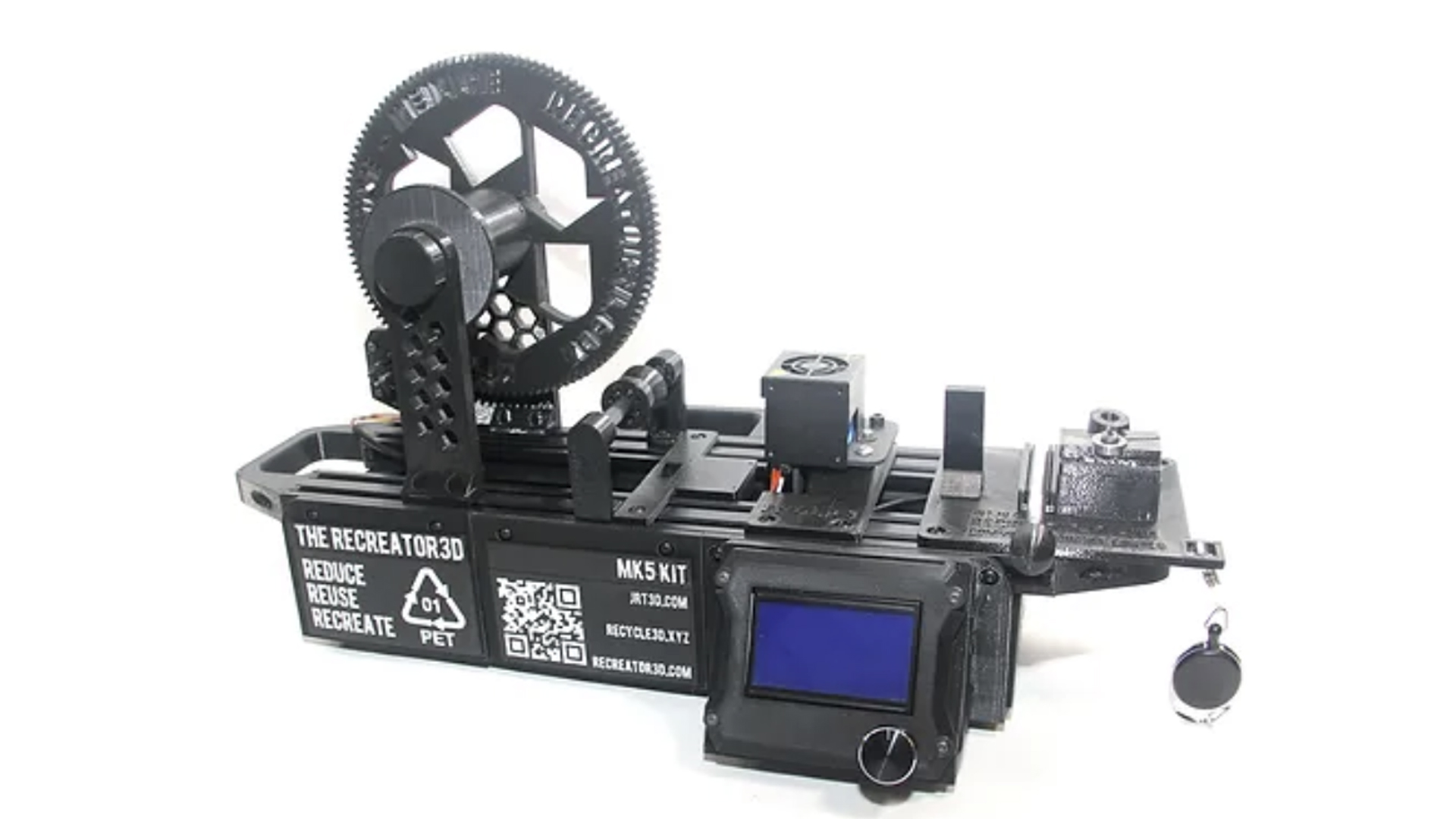
- Immediate Goal: Finish printing the initial concept so that we can recycle PET bottle with the Recreator equipment then replace all components with the recycled plastic.
- Why Recreator3d: We are using designs sourced from Recreator because we like that the system recycles older 3d printers thus further substantiating our recycling endeavour.
- Equipment: We are using a TRONXY XY-SE3 & a PRUSA MK4 to print all of the plastic components. Then of course using the Ender 3 for the electronic components.
Key Points:
- Successful demonstration with tangible products.
- Showcases recycling technology’s potential.
- Highlights the adaptability of the Ender 3.
Empowerment
Empowering Communities:
- Donations and Setup: Our goal is to develop recycling infrastructures across the globe to develop & supplement 3d printing industries while improving the cleanliness of our communities.
- Sustainability and Income: By equipping villages with this technology, we help create sustainable businesses that can generate income through the production and sale of 3D-printed goods.
- Can be done WITHOUT electricity: The PET bottles can be collected and even be sliced into the 8mm bands without electricity. Those plastic bands would then be fed in to equipment like the Recreator3d or Petamentor2 to make the filament. We plan to donate these slicers to communities, educate the communities on how to make their own, and to develop the process to create clean-usable filament. Here is an example of a printed slicer on Printables.
Key Points:
- Provides essential tools for local innovation.
- Creates new income opportunities.
Broader Impact
Global Movement:
- Feasibility: You can see in the video above the foundation of the industry already exists in the Philippines. Here in the United States, we can adapt those processes and allow the most disadvantaged of our population an avenue to improve their lives. The United States possesses the wealth and equipment to easily develop and scale this industry to be accepted by first world countries and the byproduct of this will elevate the rest of the world that participates. All we need are leaders and we are willing to be one.
- Existing Initiatives: Our work builds on the efforts of existing communities like Recreator 3D and Petamentor2, who are also focused on recycling plastic into 3D printer filament.
Key Points:
- Part of a global recycling movement.
- Adaptable and scalable solution.
The Full Value Chain
Sponsor-A-Can’s recycling and additive manufacturing program is designed as one integrated system where every participant benefits from the same set of activities. This is not just recycling. It is not just 3D printing. It is a circular industrial micro-system for communities that currently lack one.
The result: Cleaner communities. New income for waste collectors. Modern manufacturing skills. Local jobs. Domestic production capability. All from the same program.
Below: the technology, partners, and feasibility details that make this work.
Stage One: Collection
Who benefits:
Informal waste collectors, junk haulers
Better prices for sorted PET than scrap dealers offer. Training in efficient sorting. A reliable buyer relationship.
Stage Two: Processing
Who benefits:
Local community and environment
PET plastic that would have polluted waterways and streets is converted into manufacturing input. Less waste, cleaner public spaces.
Stage Three: Manufacturing
Who benefits:
Workforce and Philippine SMEs
Training in additive manufacturing creates skilled workers. Local manufacturers gain domestic feedstock and custom-part capability without overseas sourcing.
Stage Four: Production
Who benefits:
Community and local economy
Locally-made products reduce import dependency. New jobs. Demonstrated industrial capability attracts further investment.